
- 01/04/2026
- Posted by: Janick Pettit
- Categories: Articles, DR Congo, SagaTracker
Last updated on 17/07/2026
For years, Nigeria has been the default answer to “where do we go next in Africa?” The population. The middle class. The consumption story. And yes, Nigeria delivers on all of that. When it works.
But ask any brand that has navigated Naira volatility, parallel exchange rates, and shifting import regulations, and you will quickly discover that “huge potential” comes with real operational complexity. Nigeria rewards those who stay the course. It also punishes those who planned for stability.
So here is the question worth asking right now: which other African market combines scale, urban density, and consumer demand, without the same currency headache?
The answer might surprise you.
The DRC consumer market: scale, cities, and a currency advantage
The Democratic Republic of Congo has a population of over 100 million. This is twice that of Kenya, and three times that of Cameroon. Its two largest cities, Kinshasa and Lubumbashi, rank among the most commercially active urban centres in sub-Saharan Africa. A third market, Goma, sits at a critical trade crossroads in the east of the country. Together, these three cities offer a meaningful entry point into the Congo retail market, each with its own sourcing dynamics, competitive set, and consumer profile.
What some brand managers might overlook is that the DRC consumer market is largely dollarised. Many transactions happen in USD. In major urban centres, a significant share of transactions, particularly above a certain threshold, are conducted in USD. For companies doing regional planning, pricing, or margin modelling, that is worth noting: currency exposure is more manageable than in many comparable African markets, with limited parallel rate dynamics and a more stable operating environment from a foreign exchange perspective.
This does not make DRC a simple market. It makes it a different kind of complex. One that rewards research rather than assumptions.
FMCG data coverage across the DRC consumer market
Until recently, the DRC consumer market was largely a blind spot for FMCG brands. Companies operating across West and East Africa had robust data for their core markets. DRC sat outside the picture.
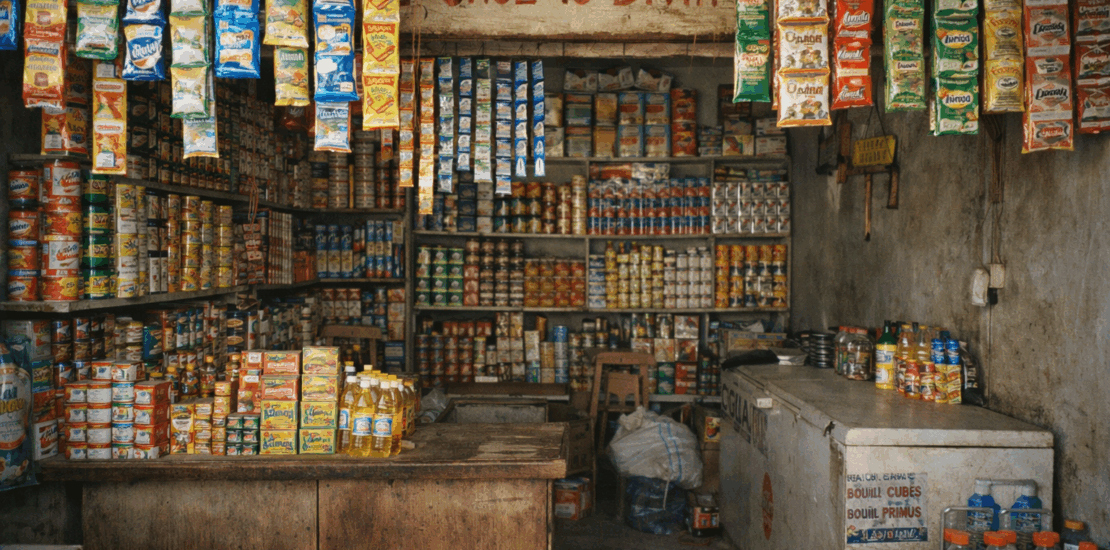
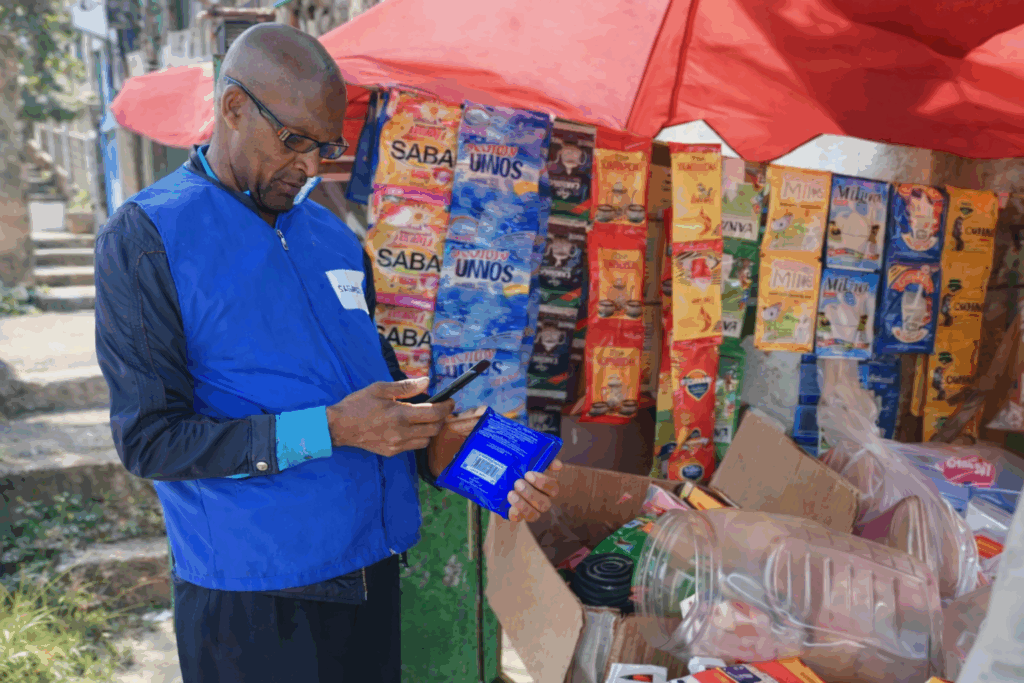
Sagaci Research has been tracking the DR Congo retail market via SagaTracker, our FMCG retail tracking solution for Africa. We cover more than 20 product categories (beverages, dairy, personal care, etc) across the main cities Kinshasa, Lubumbashi, and Goma. Distribution rates, shelf presence, pricing by channel, brand performance: the kind of data that turns a market from a rumour into a strategy.
What we are seeing challenges some of the assumptions brands bring when they first look at the country. Certain categories show FMCG distribution levels and competitive dynamics that compare favourably with more established African markets. Others reveal clear white space. Regional patterns, in particular, tell a story that national-level data alone would never surface, as our findings from a retail audit in DRC have already shown in categories like laundry care.
Why FMCG brands are moving into DRC now
The brands currently building a position in the DRC consumer market are doing so before the market becomes crowded. That is not a small advantage. In Nigeria, the window for low-competition category entry closed years ago for most segments. In DRC, it is still open, but not indefinitely.
For any brand considering DRC market entry, the infrastructure is already in place. The data is there. The cities are tracked with a methodology consistent with what Sagaci Research delivers across 30+ African markets.
If DRC is not yet on your radar, it may be time to ask why.
Want to explore what SagaTracker shows in your category across the Congo retail market? Get in touch with the Sagaci Research Retail team on contact@sagaciresearch.com or below.