

- 13/11/2026
- Posted by: Janick Pettit
- Categories: Articles, Beauty & Personal Care, SagaProduct
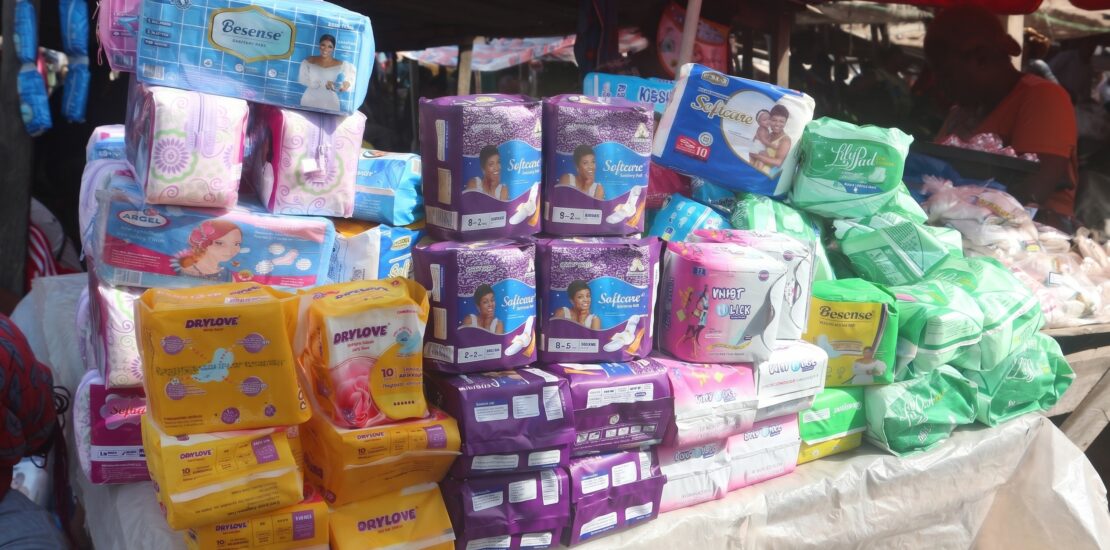
The sanitary protection market in Africa shows uneven adoption from one country to the next. SagaCube, Sagaci Research’s Africa consumer data platform, shows that penetration among women in 2026 is above 80% in Botswana, Zimbabwe, Zambia, Kenya and Gabon. In countries such as Rwanda, Tanzania and Benin, it falls below 50%.
Penetration shows how many women use sanitary protection. It does not show which products they buy or which brands they choose. SagaProduct, Sagaci Research’s online shopper panel in Africa, fills that gap: panellists scan the barcodes of the FMCG products their households use. Based on November 2026 data, ranking countries by scan volume shows where sanitary protection is most present on the panel. It also shows which brands lead in those countries. One of them, Softcare, accounts for around 30% of all sanitary protection scans over the last 12 months.
Top markets and brands for sanitary protection in Africa
The 10 key markets are the countries with the most barcode scans of sanitary protection products on the panel. They run from Nigeria, Ghana and Cameroon in the west and centre to Kenya, Uganda and Rwanda in the east. Zimbabwe, Botswana, Namibia and South Africa complete the list.
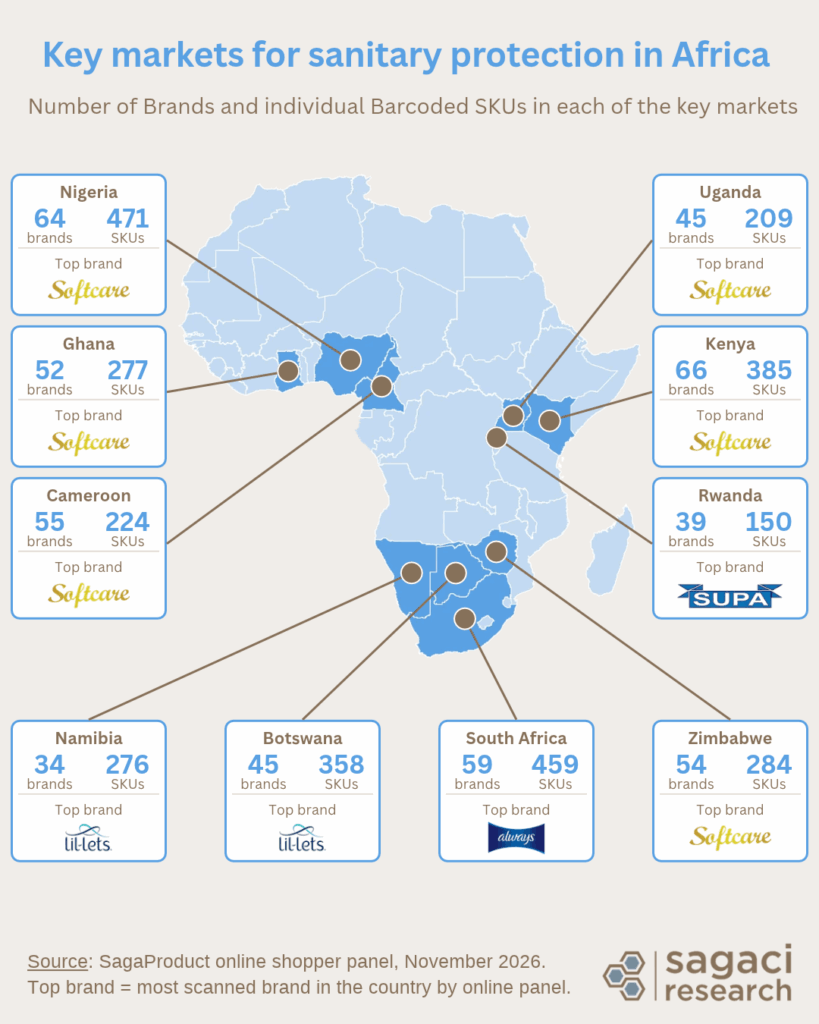
Softcare leads in Nigeria, Ghana, Cameroon, Kenya, Uganda and Zimbabwe, a spread that covers West, Central, East and Southern Africa. Always is the top brand in South Africa, Lil-lets leads in Namibia and Botswana, and SUPA leads in Rwanda.
Outside Rwanda, the key markets where Softcare does not lead are all in Southern Africa: South Africa, Namibia and Botswana. South African category data is available in the hygiene market in South Africa report.
Softcare in Africa: how the leading brand built its position
Beyond the key markets, Softcare ranks first in 22 of the 33 countries where it appears on the panel.
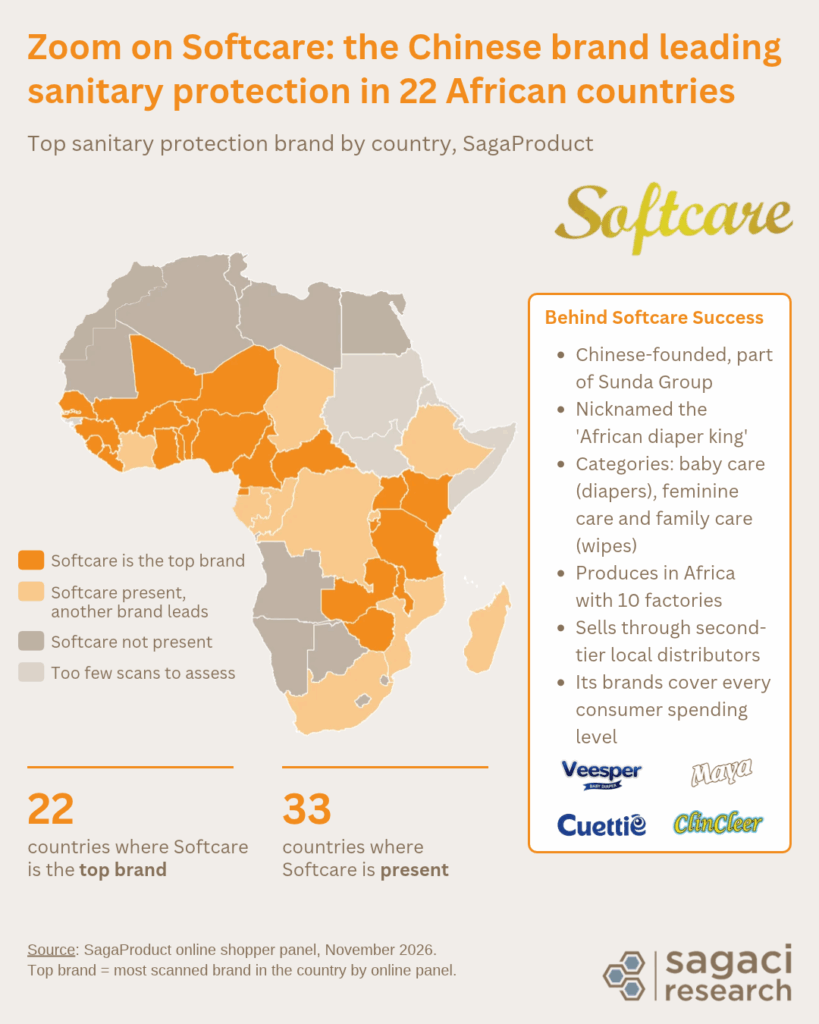
Softcare, nicknamed the “African diaper king”, built its lead on its route to market. It launched in 2009 as the hygiene arm of Sunda Group, a Chinese-founded company trading in Africa since 2004. Instead of going through large regional distributors, it supplied second-tier local distributors in towns and communities. It backed them by absorbing product losses and helping build retail shops. Local production followed, starting in Ghana in 2018 and later reaching Kenya, Senegal and Zambia. Its brands now cover every consumer spending level, from the upper tier to the general public.
See which brands lead in your category
SagaProduct tracks the FMCG products households use across Africa, by brand, format, size, flavour, price and consumer rating.
Get in touch with our team to explore the online shopper panel in Africa behind this analysis.
Methodology
- SagaProduct, Sagaci Research’s online shopper panel in Africa, tracks the FMCG products households use through barcode scanning. Period: November 2026.
- SagaCube consumer platform, 2026 data covering all African countries.
These data platforms are specifically tailored to support market entry research in Africa.
FAQ: sanitary protection in Africa
According to Sagaci Research’s SagaProduct panel (November 2026), the 10 markets with the most sanitary protection scans are Nigeria, Ghana, Cameroon, Kenya, Uganda, Rwanda, Zimbabwe, Botswana, Namibia and South Africa. Softcare leads in six of them.
Always is the most scanned sanitary protection brand in South Africa, according to Sagaci Research’s SagaProduct panel (November 2026).
Softcare is the most scanned sanitary protection brand in Nigeria, according to Sagaci Research’s SagaProduct panel (November 2026).
Softcare is by far the most scanned sanitary protection brand across Africa. It ranks first in 22 African countries, according to Sagaci Research’s SagaProduct data from November 2026. It is present in 33 countries.