

Product Testing in Africa: innovation fails when it ignores the consumer.
A product that works elsewhere doesn’t automatically work in Africa. Local taste profiles, price sensitivity, pack formats and category conventions all differ, and they matter more than most teams expect.

Questions we help you answer
- How can I optimise my product or concept?
- What are my consumers' perceptions of my product?
- Is this the right price point for this market?
- How can I create a unique consumer experience?
- How do my products perform vs. competitors?
How we approach it
Quantitative Research
- Sensory consumer insights
- Concept testing
- Naming & claim testing
- Pack testing
- Pricing testing
- Ad & campaign pre-testing
Qualitative Research
- Focus groups (FGDs)
- In-depth interviews (IDIs)
- Ethnography
- Immersions

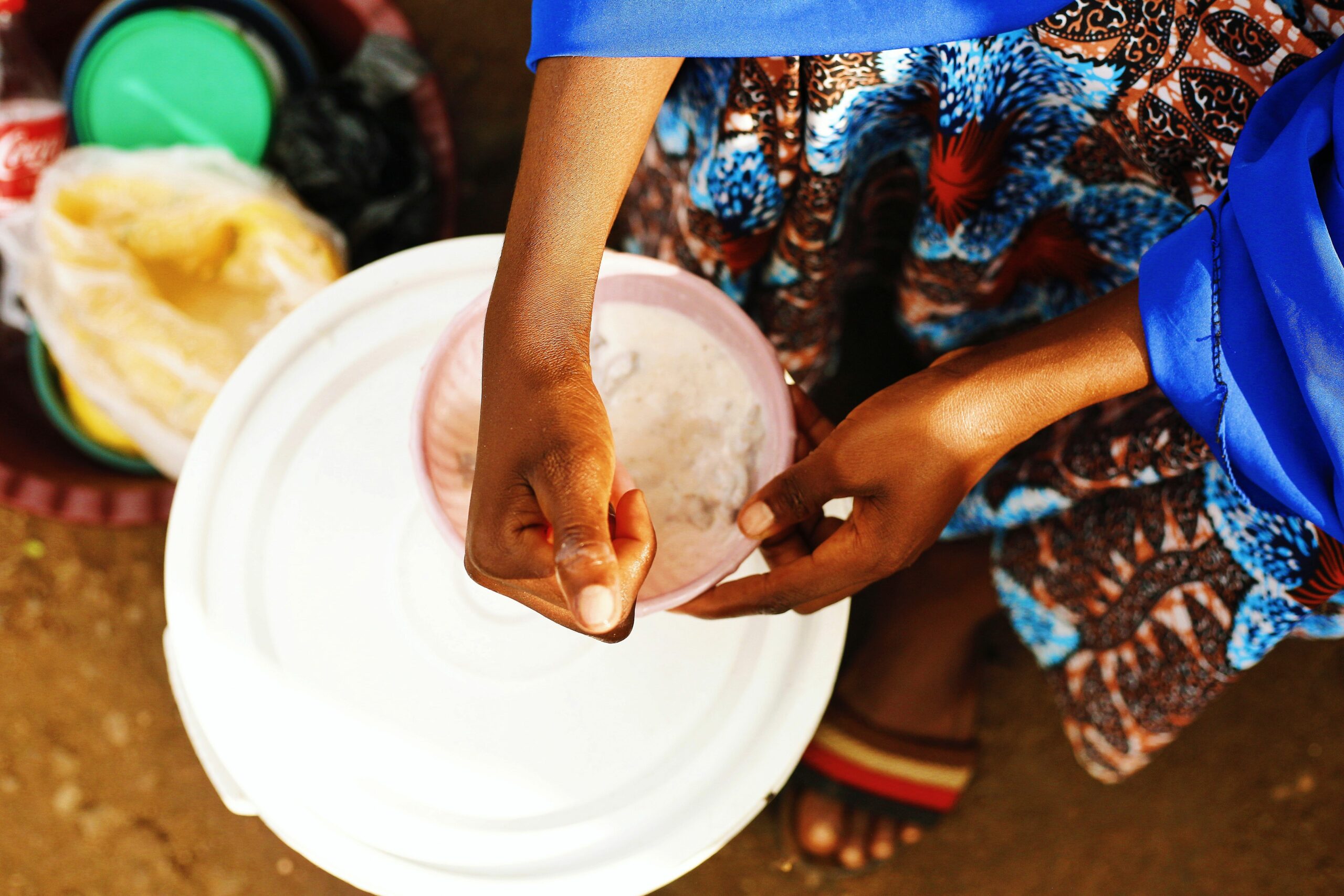
(Harvard Business School)
Ready to test your innovation with African consumers?
Talk to our team about the right approach for your markets.
Book a meetingFrequently Asked Questions
Common questions about Product Testing in Africa
Three factors account for most failures. First, sensory expectations differ: preferred taste profiles, textures and aromas are shaped by local culinary tradition and are not transferable from other regions. Second, pack size and price point expectations are different: a format that represents good value in one market may be perceived as either unaffordable or insufficient in another. Third, the competitive reference set is local: consumers compare your product to what they already use, which may be a local product with very different characteristics.
Concept testing evaluates the appeal of a product idea before it is physically developed, assessing whether the proposition, claimed benefits and intended positioning resonate with your target consumer. Product testing evaluates the actual product against consumer expectations, competitive alternatives and claimed attributes. Both are essential at different stages: concept testing guides development investment decisions, product testing validates readiness for launch. Skipping concept testing is a common and costly mistake.
For markets where online panel penetration is lower, we use face-to-face central location tests (CLTs) where consumers are recruited to a venue and evaluate the product under controlled conditions. For in-home usage tests, our field teams manage product placement and retrieval directly. Our panel presence across 30+ African markets means we can conduct consumer product tests in markets where other research agencies have limited reach.
Predictive validity in product testing depends on how closely the test conditions mirror the real purchase and usage context. CLT results tend to over-predict performance in categories where habit, distribution and packaging play a significant role at the actual point of purchase. We contextualise product test results with distribution data from our retail panel and category usage data from our consumption tracker, giving you a more realistic view of likely launch performance than a test score alone.
Our insights on Product Testing in Africa
-

Qualitative consumer insights in Africa’s Food and Beverage market: what ethnographic research reveals
Understanding how African consumers truly use products in their homes is one of the most valuable assets an F&B brand can have. Sales data and consumer surveys provide essential market intelligence. And yet the daily habits, workarounds, and rituals that shape real purchasing decisions only become visible when you step inside the home. That is
20/03/2026 -

Multi country Qualitative Research in Africa: a practical guide
Running multi-country qualitative research in Africa can be is complex. Differences in culture, language, and consumption habits mean that qualitative research across multiple markets in Africa requires a structured yet locally grounded approach. At Sagaci Research, we design and manage qualitative research using a structured, multi-country approach that allows decision makers to compare markets with
12/01/2026 -
Focus Groups in Africa: Human insights beyond the data
We conduct focus groups across Africa to help businesses understand what consumers think, feel, and do. Our qualitative research team in Africa uncovers the motivations behind consumer choices and delivers actionable consumer insights for brands operating in diverse African markets. This is especially important today, when data is abundant yet meaning is scarce. AI can
20/10/2025 -
African Food and Beverage market: exploring consumer insights with the MealScope study
Last updated on 06/06/2025 The African food and beverage market is rapidly evolving, and understanding what African consumers truly eat and drink throughout the day is essential for F&B brands seeking to stay competitive. The Africa MealScope study is an immersive research initiative designed to uncover the full spectrum of food and beverage categories in
26/02/2025